
Sensitivity & Research A living knowledge space
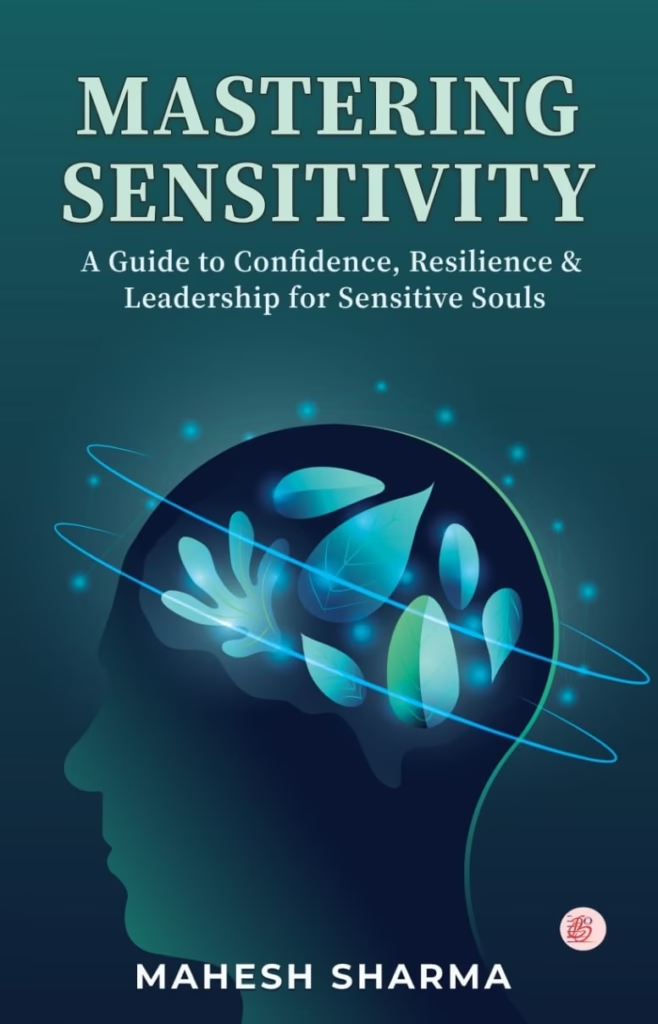
This is the central resource hub page for the book mastering sensitivity
A living knowledge space
Sensitivity is often spoken about emotionally, personally, or culturally.
It is spoken about less often scientifically and responsibly.
This page exists to bring balance.
It offers research-backed perspectives on sensitivity — not to reduce the human experience to data, but to validate lived reality with credible understanding.
This is a living page.
It grows as knowledge grows.
Why Research Matters Here
For many sensitive individuals, the quiet question beneath their experience is:
“Is this real — or is it just me?”
Research does not replace self-awareness.
But it provides grounding, reassurance, and shared language.
This space exists to:
Validate sensitivity as a real human capacity
Bridge lived experience with research
Reduce self-doubt and self-blame
Support ethical, informed growth
Key Areas of Exploration
This page draws from multiple fields, including:
Sensory Processing Sensitivity
How some nervous systems process information more deeplyEmotional Intelligence
Awareness, regulation, empathy, and relational skillNervous System Regulation
Overwhelm, safety, and self-stabilisationEmpathy and Ethics
Moral sensitivity, responsibility, and careSensitivity in Leadership and Work
Presence, trust, and humane leadership
Each of these areas continues to evolve — and so does this page.
Chapter-Wise Living Resources
A dedicated online resource space supports each chapter of Mastering Sensitivity.
These chapter-specific pages may include:
Updated research summaries
New insights and reflections
Reading and reference additions
Clarifications based on evolving understanding
Readers are encouraged to return — not frequently, but whenever they feel the need to deepen or revisit.
What This Page Is — and Is Not
This page is:
Curated and intentional
Continuously updated
Written in accessible language
Grounded in both science and humanity
This page is not:
An academic archive
A diagnostic tool
A place for overwhelming data dumps
Clarity matters more than quantity.
A Quiet Invitation
You do not need to read everything here.
You do not need to keep up.
Return when something stirs curiosity.
Return when understanding feels incomplete.
This space will be here — growing slowly, responsibly.
This Sensivity & Research page includes foundational and essential research and reference material for you to explore in more depth.
In the book, Chapter-wise live resources are linked to the exclusive online Resources Hub page, which updates on a regular basis.
Research Resources
📚 1. Extended Recommended Reading List
(Books by global voices on sensitivity, emotional intelligence, self-acceptance, leadership, and personal growth)
The Highly Sensitive Person by Elaine N. Aron
A foundational work in understanding high sensitivity as a trait, backed by decades of research. A must-read for anyone beginning their sensitivity journey.Quiet: The Power of Introverts in a World That Can’t Stop Talking by Susan Cain
Celebrates the quiet strengths of introverts and sensitive individuals in a culture that rewards loudness.The Empath’s Survival Guide by Judith Orloff, M.D.
A practical manual for managing energy, emotions, and boundaries as a sensitive empath.The Gifts of Imperfection by Brené Brown
Encourages embracing our true selves with courage, vulnerability, and self-compassion—a message deeply resonant with sensitive readers.Emotional Agility by Susan David
Helps sensitive individuals understand and navigate emotions with flexibility and strength.Radical Acceptance by Tara Brach
Blends Western psychology with Eastern wisdom to promote deep self-acceptance and compassion.The Art of Listening by Erich Fromm
An insightful classic that speaks to the heart of sensitivity—deep listening, presence, and human connection.On Becoming a Person by Carl R. Rogers
A human-centered approach to personal growth and authentic living. Rogers’ philosophy strongly aligns with sensitivity as a strength.Emotional Intelligence: Why It Can Matter More Than IQ by Daniel Goleman
Introduces emotional intelligence as an essential trait for success in relationships and leadership—something sensitive people often naturally excel in.You Are the One You’ve Been Waiting For by Richard Schwartz (Internal Family Systems)
Deepens emotional understanding and integration of sensitive parts of the self.The Power of Now by Eckhart Tolle
Mindfulness and presence as gateways to deeper sensitivity, inner peace, and clarity.The Wisdom of Insecurity by Alan Watts
A philosophical yet accessible reflection on embracing uncertainty—perfect for sensitive minds that tend to seek control.The Book of Life by J. Krishnamurti
A globally respected Indian philosopher’s human-to-human meditations on awareness, perception, and personal truth.Sensitive Is the New Strong by Anita Moorjani
A voice from Asia, this book explores how sensitives can reclaim their inner strength without losing their tenderness.
➡️ In the appendix of the book, you will find more current and advanced research links.
🌐 2. Extended Recommended Websites
(Go-to destinations for science, insight, and support on sensitivity and related themes)
- Dr. Elaine Aron’s HSP Website
The official website of psychologist and researcher Dr. Elaine Aron, who pioneered the study of Highly Sensitive Persons (HSPs). This site offers scientific information, personal insights, self-tests, and helpful resources for sensitive individuals and their loved ones. - Highly Sensitive Refuge
An inclusive online community and blog offering articles, personal stories, and coping strategies written by and for highly sensitive people and empaths. Topics include relationships, careers, overstimulation, and emotional boundaries. - The Greater Good Science Center (UC Berkeley)
A science-based site that explores the psychology and neuroscience of well-being. It provides research-backed articles, tools, and podcasts focused on empathy, mindfulness, resilience, and emotional intelligence. - Psychology Today
A well-known resource for articles on mental health, emotional sensitivity, and self-awareness. Features writings by psychologists, therapists, and researchers from around the world, covering a wide spectrum of emotional experiences. - The School of Life
Founded by philosopher Alain de Botton, this site offers deep philosophical and emotional perspectives on everyday life. It includes articles, courses, and videos on emotional intelligence, relationships, and understanding yourself with compassion. - Sensitive Empowerment by Julie Bjelland
Created by HSP psychotherapist Julie Bjelland, this platform includes podcasts, coaching, and courses tailored specifically to sensitive people looking to thrive in their personal and professional lives. - Mindful.org
A trusted platform focused on mindfulness practices that support calm, clarity, and emotional resilience. Especially helpful for sensitive readers who need grounding techniques and gentle lifestyle support. - Dare to Lead by Brené Brown
Part of Brené Brown’s larger platform, this site dives into leadership, courage, vulnerability, and empathy. While not specific to sensitivity, it’s deeply aligned with the emotional landscape of sensitive and intuitive individuals. - Insight Timer
An app-based resource with a web portal offering free guided meditations, music, and talks by global teachers. Great for sensitive souls looking for daily grounding, emotional regulation, and spiritual calm. - Heartfulness.org
A global resource for heart-centred meditation and inner stillness. Rooted in simplicity and presence, Heartfulness offers gentle, practical tools for cultivating emotional balance, self-awareness, and spiritual depth—especially supportive for sensitive individuals seeking peace amidst the noise. - Therapist Aid
Though designed for professionals, this site includes free downloadable worksheets, tools, and guides on topics like boundaries, emotional regulation, and self-awareness—perfect for personal reflection. - Know Your True Self ® Research Academy (KYTS) by Mahesh Sharma
A distinguished organization specializing in coaching, mentoring, research, and training within the domains of behavioural sciences, energy psychology, mind-body integration, and empathetic, heart-centered leadership for sensitive individuals. The academy offers valuable insights, research findings, and practical resources dedicated to exploring the inner life and personal development of human beings. - Mahesh Sharma Insights
Mahesh Sharma is a distinguished coach, mentor, and speaker, as well as a recognized humanist, researcher, and explorer. As the author of “Mastering Sensitivity” and the originator of the series “The Sensitive Edge,” Sharma offers valuable guidance and knowledge for sensitive individuals. His work, personal journey, and contributions as a change-maker and mentor are available for exploration, providing fellow sensitive individuals with inspiration and practical support.
- Dr. Elaine Aron’s HSP Website
➡️ In the appendix of the book, you will find more current and advanced research links.
📄 3. Extended Recommended Research Papers and Articles
Explore the science behind sensitivity, empathy, and emotional depth. These curated research studies and articles help validate and deepen our understanding of what it means to be a sensitive person in today’s world.
Sensory-Processing Sensitivity and Its Correlates
Elaine N. Aron & Arthur Aron, 1997
This foundational research introduced the concept of Sensory Processing Sensitivity (SPS), highlighting the biological basis of sensitivity in about 15–20% of the population.
🔗 Read on ResearchGateThe Highly Sensitive Person: A Review
Acevedo, B. P., Aron, E. N., et al., 2014
This paper offers a neuroscientific view on sensitivity, using fMRI studies to show increased brain activity in regions associated with empathy and awareness in highly sensitive individuals.
🔗 Read on SpringerLinkNeuroscience of Empathy and Compassion: Understanding Others’ Emotions
Singer, T. & Klimecki, O., 2014
Explores the neural mechanisms behind empathy and compassion, distinguishing between empathic distress and healthy compassionate engagement.
🔗 Read on PubMedHighly Sensitive Persons and Emotional Intelligence
Siegmund, M. & Wingenfeld, K., 2017
This article examines the correlation between high sensitivity and emotional intelligence—highlighting how emotionally sensitive individuals often score higher on EI measures.
🔗 Read Abstract on ScienceDirectBrain Connectivity and Sensory Processing Sensitivity
Acevedo, B. P. et al., 2018
Provides evidence from brain imaging that highly sensitive people have stronger connectivity in regions involved in awareness, self-reflection, and empathy.
🔗 Read on Frontiers in PsychologyEmpathy: A Social Neuroscience Perspective
Decety, J. & Jackson, P. L., 2004
A comprehensive look at the brain systems responsible for empathy, including the role of mirror neurons—especially relevant to understanding sensitivity in social contexts.
🔗 Read on PubMedThe Highly Sensitive Brain: An fMRI Study of Youth with High SPS
Acevedo et al., 2020
Latest research expanding understanding of how sensitivity manifests in younger populations, showing heightened emotional reactivity and deeper emotional processing.
🔗 Read Abstract on Wiley Online LibraryThe Mirror Neuron System and Empathy
Iacoboni, M., 2009
Explores the discovery of mirror neurons and their key role in empathy, emotional attunement, and the deep interpersonal sensitivity experienced by HSPs.
🔗 Read on Harvard Review of Psychiatry
➡️ In the appendix of the book, you will find more current and advanced research links.
Why this book was written
(Paperback & Other Format coming soon)
Why this book was written in the first place?
Sensitivity in leadership and ethics.